Back to petroleum for BP as it scraps green spending plans
Energy transition highlights: Our editors and analysts bring together everything you need to know about the industry this week, from renewables to storage to carbon prices.
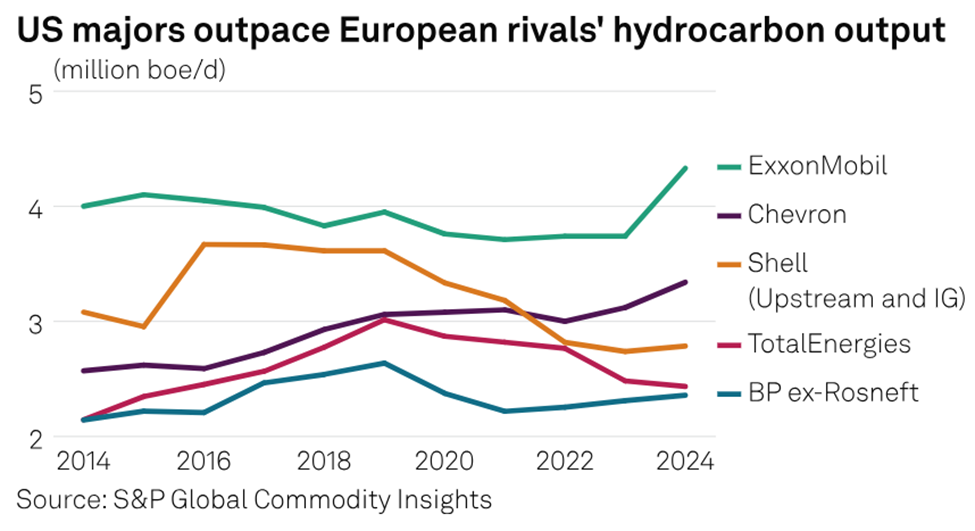
BP is no longer leaning into the energy transition. Faced with intense activist shareholder pressure, and under the management of Murray Auchincloss since the start of 2024, the oil and gas major has firmly reset its sights on its traditional core fossil business in a bid to keep pace with rival international firms, as it rows back on hydrogen and renewables projects.
It marks a stark departure from former CEO Bernard Looney’s renewables-heavy approach.
When questioned in 2023 about the company’s green spending plans, Looney responded that the company was "leaning in" to the energy transition strategy BP launched when he became CEO in 2020.
Nowhere is the move away from energy transition spending clearer than in the company’s hydrogen portfolio, which is feeling the pinch again having already been slimmed as it "focused hydrogen down" under Auchincloss.
Trailing hydrocarbon production prompts BP pivot away from energy transition
Price of the week: $6.30/mtCO2e
Platts Nature-Based Avoidance carbon prices rose to a two-year high on April 30 on firm REDD+ credit demand as corporates retire credits.
Editor’s pick: Premium and free content
Utility executives remain optimistic amid rising power demand, federal policy shifts
It is a particularly challenging time for US utilities as they deal with the simultaneous challenges of rapidly increasing power demand, supply chain kinks, and federal policy uncertainty, but executives see opportunities and say all power grid resources will be needed to meet anticipated demand growth. There is "massive growth in power demand" after a long period of declining or flat demand, and now a new policy environment is taking effect, BloombergNEF head of clean power Meredith Annex said.
China has established 125,000 mt/year of green hydrogen production capacity: NEA
China established 125,000 mt/year of renewable hydrogen production capacity at the end of 2024, the country's National Energy Administration said, highlighting the country’s rapid steps toward the development of a clean fuels ecosystem aided by its renewable power generation capacity, the largest in the world. China accounted for around half of total global renewable hydrogen production capacity in 2024.
Demand for Nature-based Avoidance Credits propels prices to two-year highs
The Platts Nature-Based Avoidance Current Year price rose to a two-year high on April 30 as market sources reported rising bid and offer levels for credits sourced from the Indonesian Katingan REDD+ project. On April 30, the current year nature-based avoidance price was assessed at $6.30/mtCO2e, up 19% on the month, and the highest since April 25, 2023.
India launches renewable hydrogen certification with 2 kg CO2e/kg H2 emissions cap
India launched a renewable hydrogen certification scheme April 29 with an emissions threshold of 2 kg CO2e/kg H2, positioning the country for standardized clean fuels production while creating opportunities for carbon credits trading in the upcoming emissions market. The certification, which follows a consultation initiated in October, establishes a verification framework to demonstrate the carbon intensity of hydrogen production. Minister of New and Renewable Energy Pralhad Joshi said there was interest from European and Asian buyers, and the certificate could help in trade talks.
Chinese solar firms wary of surging duties on their Southeast Asian factories
Chinese solar manufacturing companies have expressed intensified concerns about the surging tariffs imposed by the US government on Cambodia, Malaysia, Thailand and Vietnam, which are intermediate manufacturing hubs that process semi-finished solar products from China and export to the US market. In the past decade, direct imports of solar products from China to the US have reduced sharply due to various tariffs and trade barriers.